

Climate change is increasingly recognised as one of the most, if not the most, crucial challenges on the global agenda, as illustrated by the strong echo of the latest report released by the IPCC in August 2021
An increasingly climate-aware financial ecosystem
In 2015, the Cop21 held in Paris brought about major change for sustainable finance, which at the time was a “niche market”. Indeed, beyond the goal of holding global average temperature rise to well below 2°C above pre-industrial levels, another important, although often overlooked, commitment was adopted as part of the Paris Agreement: “making finance flows consistent with a pathway towards low greenhouse gas emissions and climate-resilient development”. Therefore, in the wake of the Cop21, investors faced a surging demand for ESG
Investors acknowledged the growing ESG appetite and launched many initiatives recently in response. Some focus on improving the investment industry’s understanding of climate risk and enhancing industry-wide decarbonisation standards, such as the One Planet Asset Managers initiative, founded in 2019 by leading investors. Others are specialised in collective engagement strategies with the largest greenhouse gas (GHG) emitters, such as Climate Action 100+. Even if these programmes are major enablers of climate awareness, they had inherent limitations in the absence of a shared clear understanding of climate risk among the investors’ community.
Climate action assessment methodologies are still in the early stages. Four renowned organisations, Carbon Disclosure Project, the United Nations Global Compact, World Resources Institute and the World Wide Fund, made a meaningful contribution to this field of expertise, launching a joint partnership in 2015 called the SBTi, to assist companies in their decarbonisation strategy and provide transparent and thorough science-based certification of their GHG emissions reduction targets. At the time of the study, the SBTi assessment scale consisted of three notches of climate pathway alignment: the 1.5 °C, the well-below 2 °C and the 2 °C scenarios. With over 1,000 verified targets worldwide as of October 31st, 2021, SBTi certifications have reached a critical mass and become a reliable tool for investors to assess corporate climate performance in recent years as it provides them with a comprehensive benchmark. It is to be determined whether, and how if applicable, such a public voluntary initiative might influence investment decisions, and hence firms’ market capitalisation.
A limited consensus in academic literature
Although academic literature on the impact of the integration of climate risk in investment decisions is nascent, a limited consensus that established that there is a negative relationship between voluntary environmental initiatives and stock performance has emerged but is still being challenged.
In 2009, Cañón-de-Francia and Garcés-Ayerbe documented a negative relationship between stock performance in Spain and the attribution of the ISO 14001 environmental certification
Furthermore, in 2011, Fisher-Vanden and Thorburn suggested that American firms that joined EPA’s Climate Leaders
Nonetheless, the consensus remains fragile since Tang and Zhang evidenced in 2018 that there is one exception that stands out from the other environmental initiatives: Green Bonds. Indeed, they established that issuing a green bond not only generates a 1.39 % abnormal stock return on average on a 21-day event window but also improves the issuer’s stock liquidity by 1.27 %, compared with match firms. They argued that these upsides were the consequence of the green label effect on investors’ attention as a green bond issue generates major media coverage as well as a verification of a firm’s green projects by a third party.
Research design and methodology
The article aims at testing the consensus on negative abnormal returns following a corporate ESG initiative based on what appears nowadays to be one of the most acknowledged environmental certifications, the SBTi certification, and experimenting with a few salient explanatory factors. To this end, we built a database of European, American, and Japanese public companies certified in 2018 or 2019 before the spread of the Covid-19 pandemic, which communicated on their partnership with SBTi either via a press release or the trade press. After conventional data cleaning was carried out, the final sample consisted of 70 SBTi-certified mid-caps and large caps companies operating in a variety of sectors.
The research design is twofold. An event study is first conducted to gauge the effect of announcing a science-based target on stock returns. The Efficient Market Hypothesis theorised by Fama (1970), which states that the “market always ‘fully reflect’ all available information”, lays the foundation for this study. The period of observation of the share prices of sample firms was set to 21 trading days around the event date while the estimation window for the market model parameters alfai and betai was set between 300 days before the event date and 50 days before the event date. We obtained alfai and betai based on the Capital Asset Pricing Model and calculated the average cumulative abnormal returns (CAR) as follows: see Formula 1
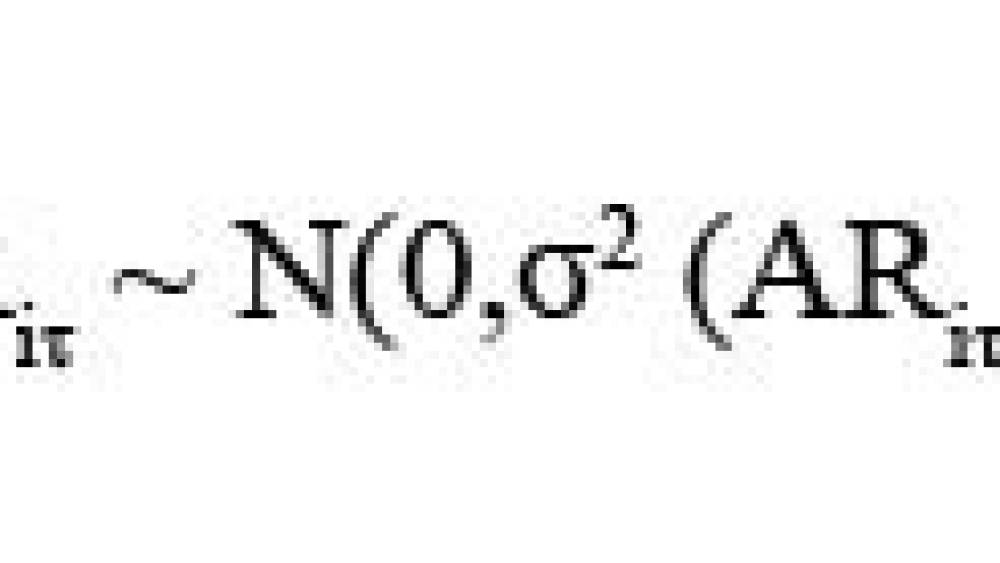
To guarantee the quality of the study, the conventional parametric test was conducted on an event-by-event basis under the assumption that abnormal returns must follow a normal distribution with the following characteristics: see formula 2
In a second step, a cross-sectional least squares regression analysis supplements the event study to identify which specific attributes of sample firms are driving abnormal returns. Based on preliminary data observation and research hypotheses drawing upon academic literature, a few financial (cash, market capitalisation, sales revenue, net income, and CAPEX) and extra-financial (GHG intensity, ESG risk rating provided by Sustainalytics, ESG score provided by Bloomberg) explanatory variables were pre-selected.
Since there were high correlation coefficients between all the financial variables, cash was the sole variable included in the regression models to avoid multicollinearity. Besides, this variable enables to test the relevance of Jensen’s Free Cash Flow theory, in particular the potential agency conflicts between shareholders and managers should the SBTi certification be considered as an NPV-negative project.
In addition, two variables related to sustainability were selected. First, GHG emissions intensity is particularly scrutinised by investors through their Active Ownership policies. As evidenced by Climate Action 100+, leading investors are urging the most carbon-intensive companies to set science-based targets. Thus, GHG emission intensity might be an interesting explanatory variable of abnormal returns. Second, the ESG profile of companies as provided by extra-financial rating agencies such as Sustainalytics might also explain investors’ decisions following the announcement of science-based targets. Indeed, since the ESG risk rating assesses among other criteria the quality of ESG disclosure and management, the SBTi certification may not be as informative for ESG leaders compared to ESG laggards.
To thoroughly design regression models, we conducted a preliminary data exploration with box plots, scatter plots and smoothing splines to identify potential outliers and striking patterns, as presented in Figure 1. Our findings motivated the use of quadratic models and the inclusion of two dummy variables to increase the reliability of the models. The selected dummy variables are based on whether sample companies operate in the industrial sector and whether sample companies have issued green bonds before April 13th, 2021.
See Figure 1
Thus, we ran the two following regression models applying the White correction for heteroskedasticity: see Formula 3
A negative overall impact of the SBTi certification on Equity Value
On average, firms disclosing the certification of their decarbonisation target experienced an estimated drop in the share price of -1.39 % on the 21-day event window around the event. However, a slight majority of the sample (around 51 %) has a positive CAR. Hence no systematic pattern of value creation or destruction was initially observed as illustrated in Figure 2.
See Figure 2
Nevertheless, the magnitude of negative abnormal returns is more expansive, as indicated by the first quartile of -5.26 % compared to the third quartile of only 3.21 %. It signals that several companies were significantly hit by the announcement of their science-based target, consistently with the limited consensus found in academic literature.
For robustness, abnormal returns were analysed in the alternative event window starting five days before the announcement and ending five days after. Findings are supportive since we found a negative average CAR in the shorter event window: on average, certified firms were hit by a -1.04 % estimated drop in market capitalisation around their science-based GHG target announcement.
Surprisingly, the study also reveals the absence of any significant difference in abnormal returns neither based on the target level of ambition nor geographical domiciliation despite the divergence in terms of ESG regulatory requirements. The sectoral analysis is more informative as highlighted by Figure 3. While certified businesses in the materials sector mainly created value for shareholders after the SBTi announcement, the opposite is true for industrial companies and utilities. Indeed, the lowest medians are observed in these two sectors, respectively -3.6 % and -11.8 %. The findings for the subsample of utilities will however not be generalised as they are only based on two observations. Data for the other subsamples do not show evidence of any significant pattern and is therefore non-conclusive.
See Figure 3
The above preliminary findings should be interpreted with care: despite many observations almost met the 10 % significance threshold, only 14.3 % of the CAR of sample firms were statistically significant. Nonetheless, they contribute to existing literature, with more optimistic conclusions on the possibility to generate positive abnormal returns under a specific set of conditions that is yet to be specified.
GHG intensity and Cash combined are two meaningful drivers of abnormal returns
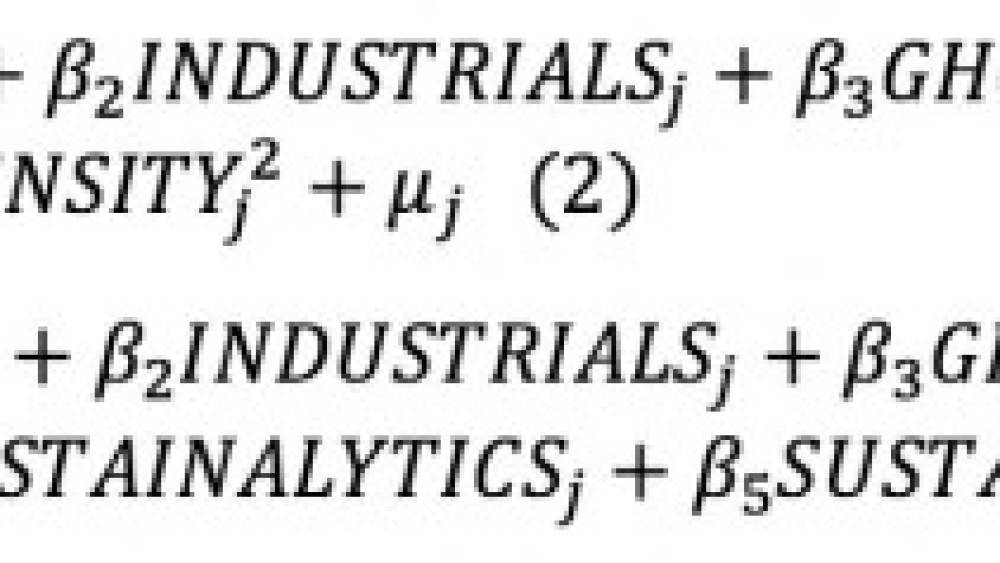
As reported in Table 1, the regression model defined by Equation (2) enables to explain 21.42 % of the variations of certified firms’ CAR, which is relatively satisfactory. Based on the estimates from the model, we can draw the following conclusions.
First, the regression coefficients of the two GHG intensity variables are both statistically significant at the 1 % level. They indicate that CARs are significantly higher for companies with extreme values, be it the least carbon-intensive businesses or the most carbon intensive businesses. There is strong evidence that the most carbon-efficient businesses’ SBTi certification is reflected in the share price through higher abnormal returns than the other companies around the certification announcement. This phenomenon could stem from the fact that investors might interpret the SBTi certification as consistent with the existing corporate strategy. Indeed, the certification process might not be too demanding for these companies and result in a more substantial brand reputation. It might ultimately help them sustain the growth of their sales revenue. Nevertheless, even if low-carbon firms outperformed the rest of the sample, their CARs are only slightly positive on average. Then, as carbon intensity increases, the CARs tend to decrease. But there is strong evidence that at some point, around 3,000 tCO2e/M€, CARs are starting to step up. Beyond a high GHG intensity threshold, at approximately 4,150 tCO2e/M€, CARs are becoming positive. It suggests that investors value the decarbonisation efforts of such carbon-intensive companies. These findings, although sensitive due to the lack of observations for the highest levels of GHG intensity, are encouraging as they go beyond Cañón-de-Francia and Garcés-Ayerbe’s results of null abnormal returns following an ISO 14001 certification for high-polluting firms. Therefore, it could spur the most polluting companies to boost their decarbonisation efforts.
Second, the regression output documents that cash is negatively correlated to certified firms’ CARs. As the regression estimate is statistically significant at the 1 % level, we can argue that companies with overabundant cash experience lower abnormal returns than other companies when the SBTi delivers a science-based target certification. Thus, each additional billion euro in cash is predicted to decrease a company’s CAR measured in percentage by 0.8 points, which is economically significant. These findings could probably be attributed to agency issues based on Jensen’s Free Cash Flow theory. More broadly, our findings confirm the conclusions of Fisher-Vanden and Thorburn on the negative impact of poor governance on abnormal returns following a sustainability-related event.
In addition, there is a negative correlation between CARs and the industrials dummy variable, that is significant at the 10 % level. Thus, for an industrial company, the CAR measured in percentage is predicted to be 3.80 points lower than certified firms operating in other sectors after considering the effects of GHG intensity and cash.
The explanatory strength of the ESG Profile is ambivalent
When it comes to the impacts of cash and ESG Profile on abnormal returns, a second model has been prepared using the ESG risk rating provided by Sustainalytics as a proxy for corporate ESG performance as detailed in Equation (3). Like the previous model, due to the selection bias, the second regression model is weakened by a lack of observations for the highest ESG risk ratings, although less strikingly. Table 2 shows that the model is almost as reliable as the first one, with an R2 of 19.45 %.
In line with expectations, the quadratic term Sustainalytics2 positive coefficient is significant at the 5 % level. In addition, there is a significant negative correlation between Sustainalytics’ ESG risk rating and certified firms’ CAR. These two variables suggest that both ESG leaders and ESG laggards’ SBTi certifications are reflected in the share prices through higher abnormal returns than average ESG performers. On one hand, observing higher abnormal returns for certified companies having good ESG credentials gives credence to the plausible explanation according to which the SBTi certification fits in their existing strategy and, therefore, may be better welcomed by investors. On the other hand, companies with severe ESG unmanaged risks are also rewarded by investors, which, as active owners, may have engaged with such companies to influence their climate action plan towards a quantitative, benchmarkable and externally verified commitment like the SBTi-certified target.
Further, the regression results presented in Table 2 are very similar for the cash and industrials variables as in Table 1, which strengthened the robustness of the aforementioned findings.
However, the regression coefficient of the green bond dummy fell just under the 10 % significance threshold. The negative correlation reported in Table 2 is not significant. Therefore, we cannot reject the null hypothesis: green bond issuers do not have a special status in the sample.
Main implications
Consistent with most academic literature, our findings suggest that the SBTi certification mainly generated a downside for companies with an average estimated drop in the share price of -1.39 % on the 21-day event window around the certification announcement. These results have important implications since they inform policymakers on the very likely lack of efficiency of existing regulation in leading OECD countries to incentivise the private sector to participate in the global efforts to respect the objectives of the Paris Agreement.
Findings also suggest that there is still room for improvement for the recently launched initiative itself. For instance, based on disclosure practices of the early adopters of SBTi certification, the lack of consistency and comparability of reporting data on SBTi target progress was pointed out by Giesekam, Norman, Garvey and Betts-Davies in 2021. Because of this limitation, investors might find the initiative not informative enough and not revise their expectations upwards when they are presented with an SBTi certification. Nonetheless, the SBTi acknowledged deficiencies of corporate reporting on target progress in its 2020 progress annual report. They reacted accordingly: measurement, reporting, and verification guidance for members are expected by the end of the year 2021. Current best practices in the green bond market, which provide investors with the basic guarantees they seek, following Tang and Zhang, could serve as an example for the SBTi. Potential areas of development for the initiative could be but are not limited to disclosing the amount and nature of investments required to reach the target and releasing a distinct annual impact and allocation report to track the progress on the achievement of science-based targets.
The overall negative abnormal return should not overshadow the variety of the situations of certified businesses, as half of the sample’s certifications delivered positive abnormal returns. There is strong evidence of a U-shaped relationship between certified firms’ CAR and their GHG intensity, favouring the least and most carbon-efficient firms. A similar relationship applies between certified firms’ CAR and ESG profile as measured by Sustainalytics. Industrial companies seem to be particularly more penalised by investors than the rest of the sample, which might dissuade their peers from joining the SBTi in the future, whereas decarbonisation is crucial in this sector. Therefore, prior to join the SBTi, intermediate GHG intensity and firms operating in the industrial sector should mobilise their investor base to better gauge expectations and tailor their communication on decarbonisation accordingly.
To what extent is corporate climate action rewarded by capital markets? It is a fundamental question that remains to be addressed in the nascent academic literature on climate finance. The article examined the consequences of the SBTi certification on the market capitalisation of certified firms. It, therefore, provided new insights on the interpretation and integration of climate risk by international capital markets in the late 2010s, after a series of events drew unprecedented attention to climate change.