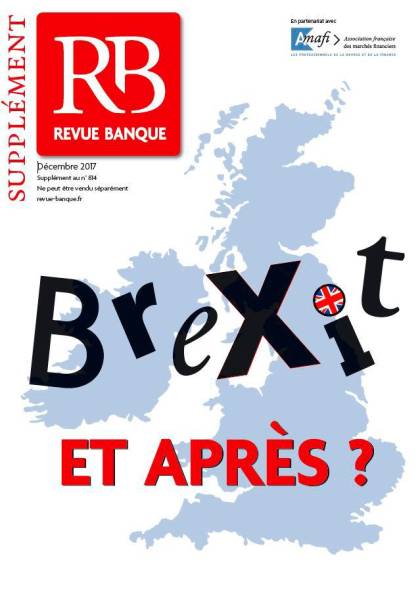

What could be the new balance between European places, and between European and other International financial places in a post-Brexit era ?
Until now, there is little doubt that London has had a position of absolute supremacy in Europe’s financial landscape. Although it is likely to remain a relevant and important financial center in the future, Brexit clearly poses some challenges to the City. Advisory services and investment banking are probably not going to be too much affected in the short run ; however, it is likely that asset managers will gradually start relocating in other European cities such as Luxembourg, Dublin, Paris, Frankfurt, Amsterdam and Milan, from where it is going to be possible to serve the entire EU market with a unique “passport”. It is to be understood whether the move of many asset managers away from London will reduce the great concentration of talents currently present in the UK capital in the financial sector and for this reason gradually have a negative impact also on other segments of the financial industry and the overall economy.
More precisely what role can play the Italian financial place?
Milan is already home to two of the largest European banks, Intesa San Paolo and Unicredit, and hosts offices of many international financial players. It is a modern and dynamic city, it could surely benefit from partial relocation of asset managers and other financial companies from the City to the continent, although my guess is that this movement will not be “dramatic” in any single location, but quite widespread, with maybe Frankfurt (because of the ECB presence and the role of Germany as the largest European economy) and Amsterdam (because of its international tradition) gaining a higher than average quota of the business. This prediction could partially change if Milan is to be chosen as the new location for the European Banking Authority, which at the moment is only a possibility.
Is there any consequences to expect for the economic players (corporate, investors…) and their capacity to access to financial services ? Is there any special consequences for Italian economic players ?
In a globalized, competitive and digital economy, I am not expecting radical changes in the capacity of any player to access high quality financial services that are nowadays available from many suppliers in different world locations. Clearly, there have been advantages in the past, also in the recent past, from large concentration of talents and skills in a few financial centers able to serve institutional clients and companies also in other countries. But the world is changing fast and most financial services are already and will increasingly become available on mobile devices and on the cloud with little interest for the exact location where these services are first thought and then realized and managed. In the new financial landscape, there could actually as well be a de-emphatization of the same concept of a financial center, and the development of new financial networks whose nodes may be physically distant from each other.
Italian players have to show their ability to adapt to such a new landscape and to compete in a dynamic and fast changing financial system. I am expecting further consolidation in both the banking and financial industry as regards supply of standardized products and services. Higher competition will decrease margins and impose to successful players to search for economies of scale. At the same time, niche and innovative operators will benefit from a potentially much larger market and may grow rapidly.
Is there any risk of market fragmentation in a post Brexit era ?
Market fragmentation actually emerged as a response in banking (and partly in sovereign debt) after the Lehman crisis and the
I do not think Brexit will be impacting so much on overall functioning of financial markets. These are already widely globalized and integrated and London will keep its role as an important financial centre also if it leaves Europe. Clearly, as already suggested, Brexit will redistribute shares of the business to other European financial capitals, such as Amsterdam, Frankfurt, Paris, Milan, Luxembourg. However, the impact of such redistribution at a global level will remain limited.
Is there any decisions to be taken by governments or regulators to strengthen European finance?
The completion of the banking union and the capital markets union are the two relevant projects pursued by the EU Commission. However, my impression is that the Eurozone (more than the EU) should aim higher and tend to centralize further decisions about some relevant items in the fiscal and political field in order to avoid the difficulties that might be linked to the occurrence of a new severe and negative macroeconomic shock.