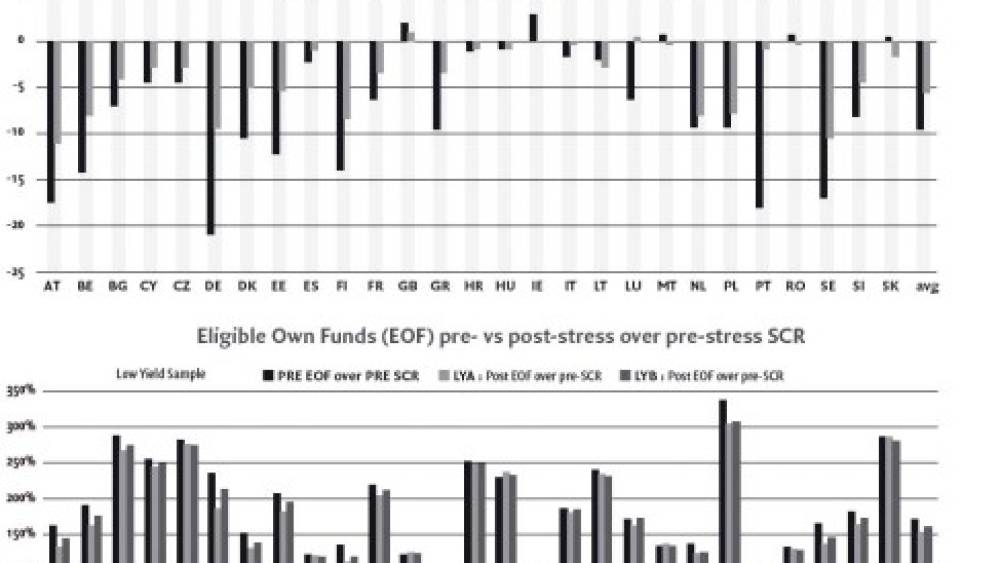

Since 2011, EIOPA is observing the increasing risk of the protracted low interest rates environment for the European insurance sector. According to the latest EIOPA’s forecast published in the recent Financial Stability
These observations were confirmed by the EU-wide Insurance Stress Test conducted by EIOPA in
Regulatory response to the low yield environment
The vision of EIOPA is that the low yield environment should be addressed at the EU level in a consistent manner. To achieve this goal we have undertaken a number of regulatory steps.
In 2013, EIOPA issued an
Certain work is being done in cooperation with the European System Risk Board (ESRB). Already back in 2013, EIOPA raised awareness about this potential risk of low yields at the ESRB level and as a result this risk has been included in the ESRB overview of systemic risks. In 2015, EIOPA and NCAs indicated that low interest rates have become a number one risk for insurers, which was reflected in the ESRB’s annual working plan.
Within the ESRB, EIOPA took a lead in developing proposals for the regulatory steps that are necessary to mitigate this risk. By the end of 2015, we plan to finalise our suggestions. Furthermore, EIOPA is currently working on the methodology that NCAs should use in order to assess the low yield risk and the scope of the problems it creates. Looking forward, this methodology is supposed to become a very useful supervisory tool.
What impact Solvency II will bring?
On 1 January 2016, the new supervisory regime – Solvency II – enters into force. At first glance this creates pressure on solvency positions, because under the new regime capital solvency ratios will be lower than under Solvency I in most cases. Moreover, there will be also some companies which might be found undercapitalised and will need to deliver recovery plans to address this issue. However, Solvency II should not be blamed for that!
Under the previous regime (Solvency I) the risks to insurers remain the same, just they are hidden. Under the new framework, on the contrary, the low yield environment will be truly reflected in the final solvency ratio of insurance companies. The new fair value based and risk-sensitive regime will not create new risks, but will make the existing risks more visible and the situation of companies more transparent. And this is clearly an advantage for industry and supervisors alike.
We believe that Solvency II will bring a stabilizing element in the European insurance sector. Thanks to such an important risk management tool as the Own Risk and Solvency Assessment (ORSA), risk considerations and their capital consequences, will be explicitly taken into account in the strategic decisions of insurance companies. Furthermore, the companies will better understand the risks and will be prepared to take necessary actions in order to mitigate them. This will ensure an appropriate balance with the natural sales driven culture.
At the same time Solvency II will allow NCAs to properly review and evaluate compliance of insurers’ strategies, processes and reporting procedures with the new framework. Supervision will become more forward-looking and risk-based, and NCAs will be working together with companies in order to reduce the risks of the low yield environment.