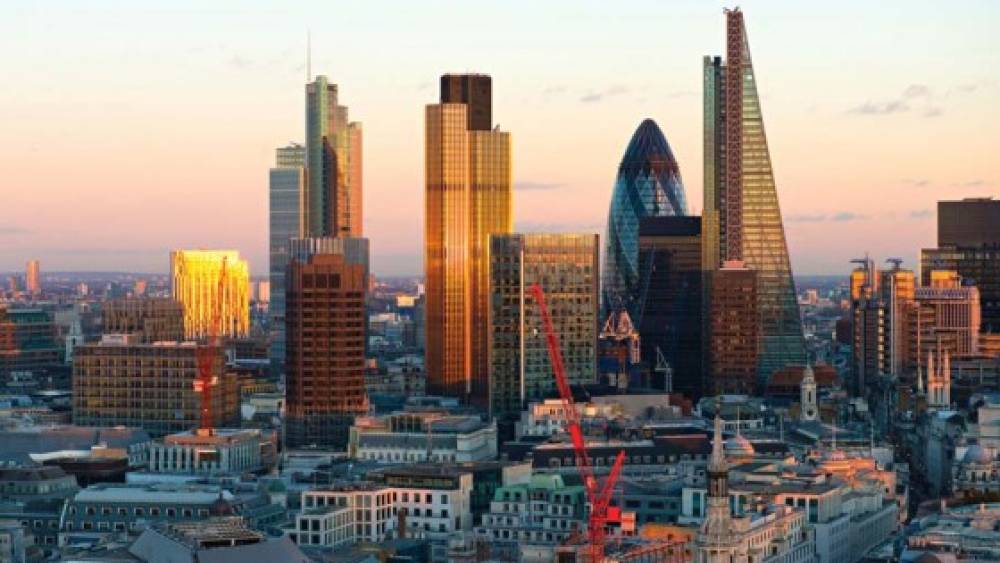

The financial and professional services industry is a huge engine of growth for the whole of the UK – not just London. It accounts for 2.1 million jobs across the country – two-thirds of which are outside the capital, yet many people assume that London is the be-all and end-all for ‘City’ jobs. The reality is so much more than that. Glasgow has the second largest number of accountants in the UK. Birmingham has over 22,000 people working in the legal sector. JP Morgan is the biggest employer in Dorset behind the local council. There are companies and leading institutions with a significant presence up and down the country – so much so that there are now 22 cities in the UK with 10,000 or more employees in the financial and professional services sector.
To help restore the battered reputation of the City
Moving away from this London-centric belief is one challenge. Another is to help restore the battered reputation of the City. So much maligned for the last few years, only politicians regularly rank so low when talking about the reputation of those that work in finance – particularly in banking. Part of my job is to speak not just for the City – but also to the City. The message when I say this is clear: yes, mistakes have been made and people should be punished for those mistakes. But we cannot afford to continue to undersell the success of the City over the years and its potential now. When I speak to governments across the world on my programme of international visits they are much less concerned about what went wrong in the past, whether it’s PPI, Libor or forex scandals, as much as what we are doing now and in the future to rectify this.
While the City can be seen as major standalone sector – in terms of output, jobs and tax contributions – it is also a vital part of wider economy, acting as the lubricant which helps keep businesses and jobs going. From helping SMEs to access finance, to helping get infrastructure projects off the ground through innovative financing models, to managing assets on behalf of individuals and institutions. But why has the UK as a financial district always been at the top of the pecking order when compared to others on the global stage?
The business environment
The City of London Corporation’s report with Bourse Consult, ‘Building a modern financial centre,’ identified six characteristics as having a significant influence. The UK scores well on all of them.
Firstly, the business environment – particularly the ease and cost of doing business, political and economic policy and infrastructure. In this area the UK does well being ranked 8th globally in the World Bank’s ‘Ease of Doing’ business survey. The Coalition government has held together over the past five years providing stability that the markets thought might have been impossible at the beginning. On top of this the UK has excellent infrastructure from office space in London and the other leading cities to its position as an international hub for travel. Sure, this can be improved – airport capacity, inter-city transport (like Crossrail across London) and broadband are all areas that come to mind.
While physical infrastructure is important, just as much of a requirement, and the second element on this list, is the financial market infrastructure. Here again, the UK is a world leader. Over the Counter markets provide a smooth and efficient platform for foreign exchange, derivatives and bonds. Market information systems offer global coverage and clearing houses or central counterparties play a central role in clearing and assuring trades. The UK is the envy of the world for the success in the financial market infrastructure.
More often than not, regulation is seen as one the major boons of the financial services industry – ring-fencing, the bank levy and banker’s bonuses caps cited by some as examples. But at least the UK is able to offer a balance between onerous and light-touch. Financial markets hate uncertainty while the UK’s legal framework provides a great environment for companies in that they know any transaction is final and irreversible and that litigation is quick and impartial. This third reason adds to London and the wider UK’s attraction for foreign investment.
Melting pot
Talent, more specifically the people that work here, are the fourth reason we are a leading financial centre. London has always been a melting pot able to attract the world’s brightest and best. So much so that in the Square Mile today there are six nations (USA, India, China, Germany, France and Ireland) with at least 5,000 workers here. Our comparatively light touch labour laws mean we can attract and employ people from an increasingly mobile workforce. While our standing as a global leader for educational institutions (we have two of the top ten universities in the world – Oxford and Cambridge) means our domestic talent is able to compete on the global stage.
Our connectivity on the world scene works in our favour for two reasons in particular. Firstly, our time zone in the world mean we can speak to Asia in the morning, Europe during the day and the US at night. And crucially all this can be done easily because of the advantage that the English language gives the UK in the global business world.
Finally London’s reputation as a leading global centre for finance is self-sustaining. Acting as a gateway for international trade with Europe, it explains why the UK is the number one destination for FDI. It also explains why the City is a cluster for so many ancillary industries like legal services, PR and advertising, insurance and accountancy as a starter. Having a concentrated area makes it easier to provide facilities – such as transport, real estate, utilities and telecoms – which meet the specific needs of financial services firms.
Quite simply the success of London, and the wider UK, is down to a variety of reasons: from the tangible, such as regulation, the business environment, people and infrastructure, to the intangible such as history, location and reputation.
100 days around the world
My jobs as ambassador for the UK’s financial and professional services industry is to act as its champion. I will spend around 100 days of my Mayoralty around the world selling this sector to the key international markets. And with a background in sales there nothing more that I love doing. Fortunately in the UK we have a great product to sell.