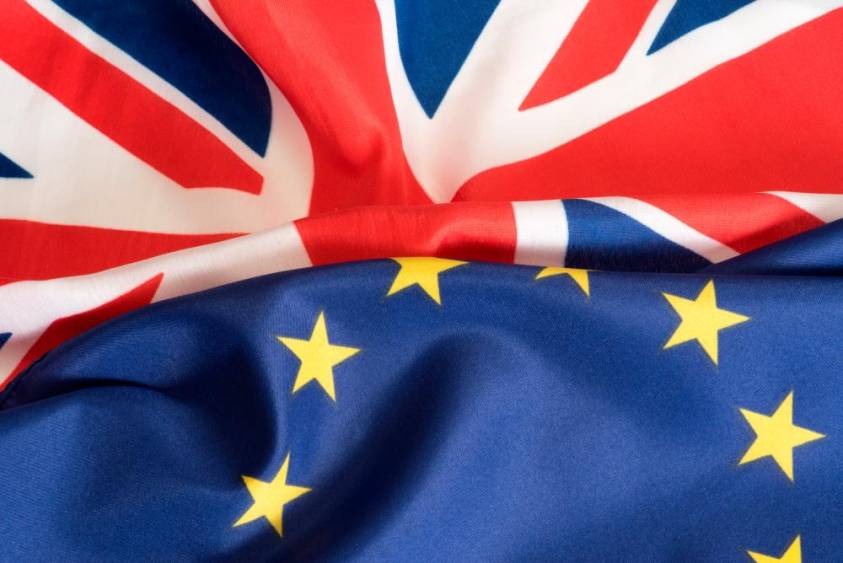

The first meeting of the EU-UK Joint Forum on Financial Regulation that took place in London last month is important, because the meeting marked the first formal step in rebuilding relationships between governments and supervisors after a bruising few years. It is also limited, because the meeting cannot disguise the impact of Brexit so far, the inevitable future divergence of the UK and EU regulatory frameworks, or the challenges ahead for a closer relationship.
The MOU was part of the original Brexit withdrawal agreement signed in December 2020. But as an indication of the importance and sensitivity of financial services to both sides, it took more than two years for the MOU to be formally signed in June this year. While some people in the UK have sought to dress up the MOU as some sort of ‘deal’ between the UK and EU in financial services, it does little more than commit both sides to discuss regulatory cooperation on a regular basis. In many respects it echoes the existing agreements that the EU and UK already have with the US and with Japan. One participant in the first meeting described its as “welcome, overdue, and cordial” but “little more than talks about talks”.
Despite the welcome progress, the MOU will do little to repair the damage so far from Brexit. Our research at New Financial has identified nearly 500 UK-based financial services firms that have relocated jobs, legal entities, or part of their operations to the EU in response to Brexit. We think that this involves at least 10,000 jobs so far (both relocations and local hires) and we expect this number to increase over time. As activity grows over time in the EU, the real loss to the City of London will be the creation of jobs across the EU that would previously probably have been created in London.
A few years on from Brexit, it is now possible to measure some of the impact of business that has relocated. Before Brexit, over 40% of trading in EU listed companies was executed in London: all of that has since moved to the EU (mainly to Amsterdam). The UK has lost around a fifth of its share of trading in euro-denominated derivatives trading, according to the Bank for International Settlements (although with a share of 70% of European activity, London is still by far the dominant centre).
The main area in which the MOU will be useful is in helping the UK and EU navigate the inevitable divergence in their regulatory and supervisory frameworks in the coming years. The UK has launched an ambitious programme of reform, with over 30 different dossiers included in the Edinburgh Reforms package in December 2022 and the Mansion House Reforms this year.
Of course, the EU is also pushing ahead with its own reform agenda. This is already causing ‘parallel divergence’, with both sides reviewing many of the same regulations for the same reasons, diagnosing many of the same problems, but developing slightly different solutions on a different timetable. So the frameworks are diverging in the same direction – but diverging all the same.
There is also a sense of each side copying the other’s homework to keep a close eye on these reforms. In that sense, arguably the EU is having as much influence on the UK framework as it did before – and vice versa. But the MOU does not fundamentally change the basic fact that the UK has chosen to remove the City of London from the single market and the EU has chosen to continue to apply the rules of the single market.
Close cooperation between the UK and EU in financial services is a fact of life given how interconnected their financial systems are. The MOU provides a formal structure for that cooperation, and the talks will gain in substance in the coming years. But the idea that it will open the door to a wave of equivalence or the return of open access to each other’s markets, is a fantasy. Sadly, that ship sailed long ago and we do not expect it to return.