
Some private equity firms are known to have an evil image in the eyes of the market. Their specific point of view on portfolio companies put their motives in question when the stock market and public interest are concerned. The focus of this paper is to analyze the stock performance of a sample of portfolio companies, which are later offered to the public via an IPO, and the uncertainties of the private period from an objective stock market point of view. The sample selected includes exclusively Reverse LBO companies which can largely be defined as companies that were held by private equity firms and exited through an IPO.
The implications and mindset
The main problem arises from the private period which is not easy to monitor for the public off-takers. There are many companies which are offered to the public by a private equity and performed very well. However, the market has also seen its fair share of firms performing badly after the IPO in addition to a few scandalous instances where members of the management have even ended up in jail for frauds. Seeing that, these types of transactions can have extremely different results, it is worth looking into the factors that might have an explanation on this very matter.
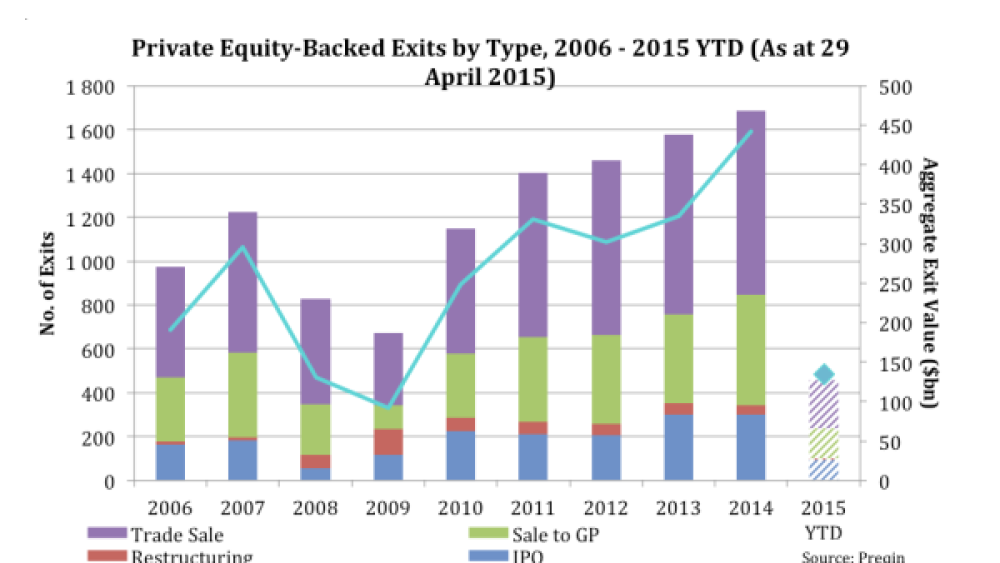
The primary question mark remains on the private period and how it is managed by the private equity firms. When we take an objective look at these types of investments, their natural and main purpose is to create value for their shareholders. So when a private equity firm is choosing their investments, they are looking for companies with cost-efficient growth potentials. By financial, governance or operational engineering, the investment is to be modified in such a way that it can be sold for a higher value. Ultimately their main focus is to exit their investment with high returns in a sufficient yet reasonable time period. In order to do this, the investors can choose one of the many exit types such as trade sale, MBO, IPO and they can also sell it to another PE investor on the secondary LBO market. However, only one of these exit types concerns the public interest. Thus, when it comes to RLBOs a higher scrutiny in post-IPO period is very much in order.
An IPO for any company is a testament to its extraordinary performance. These heavily mediatized events show the market that the company has been performing well and with the help of the cash injection from its IPO, it is ready to grow even more. However, the decision to offer company’s shares to the public is not an easy one to make, considering the dilution that it will bring to the shareholding structure. Also as a consequence, a large sum of the company’s information would have to be public. When a private equity exit is concerned, the exit would not be total in case of an IPO, which is contradictory to private equity mindset in a way. In addition to all of this, if the company does not portray a certain quality to invigorate a certain liquidity in the market, the IPO could very well fail.
xxxmettre ici graph 1xxx
In order to identify good RLBOs from the bad ones we have to examine and analyze different practices used by investors. There are some key factors which comes to mind at first glance such as holding period and the involvement of the private equity investor in the management. After all, the value added to the company will be highly dependent on the private period. Since this is basically the expertise area of the private equity firms, the expectations from this period are very high yet it is still dependent on specific and unique factors for each deal. However, this does not change the fact that it constitutes a grey area in the eyes of the off-taker. The consequences can be significant when it is offered to the public.
In-depth private period
Analyzing data from RLBO offerings and comparing their performance to their respective market indexes, which will be explained in the second part, will give us a general understanding of whether RLBOs can outperform the market. However, statistics cannot be applied to an individual case and its success. This is why first of all we need to take a look at the private period. In order to have a sense of it, there are three different cases explained below. They have been selected to be able to examine unique situations in order to observe and to deduce a set of best practices, ultimately to differentiate the good RLBOs form the bad ones.
First case examines the RLBO of Hospital Corporation of America. This case is representative of how a prestigious and involved management can bring undeniable success and prominence to a company. This RLBO case was a $ 33 billion worth buyout from the stock market, by a group of investors including KKR, Bain Capital and Merrill Lynch Global Private Equity. Only around $ 5 billion of this value was financed by equity, a typical aspect of these types of transactions, which means that there was a very significant amount of debt at the beginning of the deal. Even though it was mostly composed of secured loans, thanks to the collateral it can provide, in its balance sheet it had some costly second-lien
A good LBO driven into a bad situation
Although success stories are not hard to come by, sometimes certain unexpected factors can hinder the RLBO process and the deals may require extraordinary measures to finalize successfully. This is the natural outcome of the risk counterpart of high returns in this business. First Data Corp’s RLBO by KKR in the year 2007 is a very good example of a good LBO driven into a bad situation. The company is a provider of electronic commerce and payment solutions for merchants, financial institutions and card issuers. Their business plan consisted of acquiring smaller start-ups in the payment industry. However, the main problems of FDC during the private period were the start-ups such as PayPal and Square becoming unforeseen competitors. In addition to this, the impact of the financial crisis on people’s spending levels made it very difficult to service the debt. During the private period 2 subsequent CEO’s quit the company. Just as KKR was about to start disposing of core assets to salvage the investment, the current CEO started a turnaround program by repurposing the assets that were about to be sold. On a financial level, after this point, they preferred private placements over conventional debt. Also in the management level, new people with better skillsets for the envisioned plan in addition to incentives to make these people more involved with the performance of the company, sealed the success of this RLBO. So as we can see, even though the RLBO was about to be a failure, an effective management, such as the CEO’s new and able management, turned around the situation for a successful IPO. The IPO itself was the largest in the US during the year 2015.
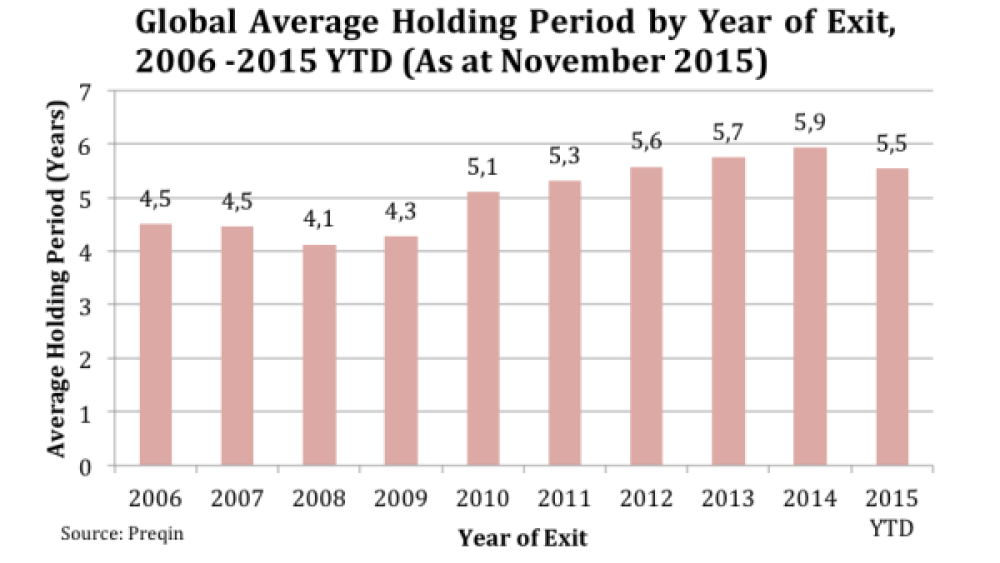
If we only look at the examples above, the prospects of RBOs are mostly good and they seem very innocent. However, in the same framework, there is a type of RLBO deal that is called a quick-flip. This consists of a regular RLBO deal with a much shorter than average holding period, typically under one year. Since the investors in this business are ultimately after their exit to close a highly profitable deal, there is a certain grey area that needs to be examined which puts the motives of the investors in question. The quick-flips are criticized because they are likely to be beneficial only to the investor and not the company itself. By this logic, what kind of event that can unfold after its IPO is difficult to foresee. This would not be a significant problem in private sales. All in all, the off-taker would be penalized for its purchase without a thorough due diligence of the company. However, in the case of an IPO, there is a certain morality issue that arises from the fact that it would be open to public. Since the public companies are obligated to reveal information, any trace that the original investor might have left about its dishonest actions, would be highly problematic.
Investing in toxic shares
Refco’s scandal was the outcome of a quick-flip where the investor, Thomas H. Lee Partners, exited the company within a year of acquisition. Due to the CEO’s revelation of false information, the case ended with a lot of investors investing in toxic shares. The reason why they did this was to make his company appear more valuable and less risky to invest. The CEO of Refco was sentenced to prison because he effectively hid a debt amounting to around half a billion dollars by dressing the books by using intercompany transfers between his own companies. By doing so the market performance of the shares would naturally be better than if it had such a debt in his books. When these transfers were revealed 2 months after its IPO, naturally the company went immediately bankrupt. It is very important to note that the report made by the final examiner showed a certain special dividends paid to the original investors right after the IPO. When we look at the case as a whole, there is a lot of evidence pointing to the short-term return mindset of the investor, which is later crowned with a public scandal (see Graph 2).
Findings on empirical analysis
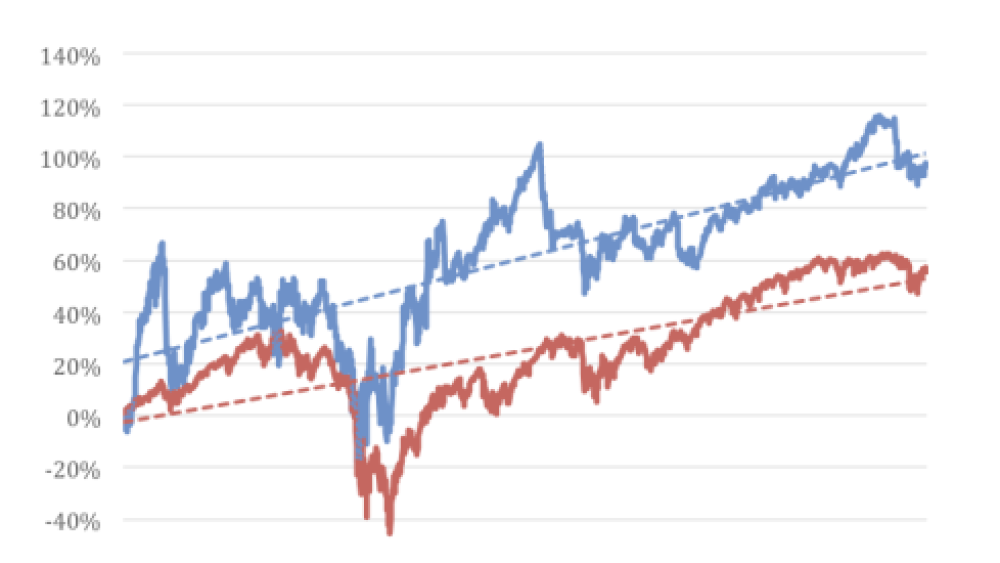
This final part summarizes the findings of stock performance and fundamentals analysis on a sample of RLBOs. For the stock performance analysis, they are formed into a proxy index and tested against their respective benchmark indexes (NYSE Composite and NASDAQ Composite). The portfolio is devised up in a way that assumes new and equal distribution among portfolio companies as they enter the stock market index one by one. The reasoning behind this approach is to observe how well a portfolio that consists of only RLBO stocks would perform against their benchmark indices. During this analysis there is one important thing to keep in mind. The original investor is not able to exit the company entirely at this type of exit, so it is in every shareholders’ best interest that the company should perform well after the IPO as well as during the private period. The data is provided by Bloomberg (see Graph 3).
The findings for these two portfolios are as follows; NYSE portfolio starts by heavily fluctuating but it becomes smoother as the new stocks are added to the portfolio after their IPOs. The RLBO portfolio is clearly outperforming the composite index. NASDAQ portfolio, due to its smaller proportion in the sample, showed steeper peaks and troughs on its performance graph. In addition, NASDAQ is populated by tech companies so heavier volatility is expected. However, overall trend is in favor of the proxy portfolio, it is outperforming the NASDAQ Composite.
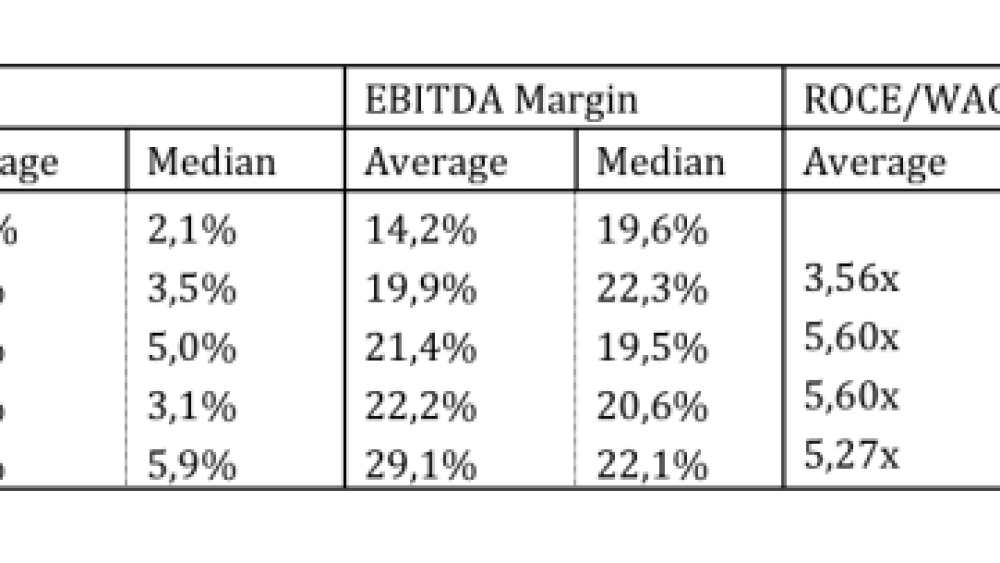
In order to further the analysis on their performance, we can also look into their “fundamentals’’ and ratios’ growth over years. For this purpose, since we are not constrained by the index issue, some European countries were added to the sample in order to make it richer. The companies are expected to emerge from the private period with a new capital structure, including the restructuring and the new public shareholding structure. Accordingly, over the years following the IPO, the new and improved performance of the company should normally prevail. Since the shareholder value is paramount for the original sponsor, the market capitalization is expected to rise. Operational and financial performance will be tested. The Table 1 represents a summary of the findings with key indicators of performance and their growth. The years illustrate these indicators at one year before, during the year of the IPO and the following 3 years. The data is acquired from Bloomberg and the company Annual Reports/ SEC filings.
As the medians and the averages of ROA and EBITDA margin indicate, the companies clearly improved on operational performance and on efficiency using the assets of the company post IPO. Since EBITDA is a relatively good indicator of free cash flows to firm, we can deduce that the FCFF generation is increasing over time. Also, as it was explained above, ROA was used to add a neutral indicator to net income which is now independent from the total balance sheet. Especially in the median level, they are showing promising results.
ROCE/WACC constitutes a very effective testing tool in the analysis of shareholder value creation relative to the used funds. As ROCE includes the capital employed, it gives a fair summary of how effective the company assets are in terms of generating returns. In addition, WACC is the cost of such capital financing these assets. The ratio itself shows these two concepts in comparison to each other, suggesting how effectively the company is utilizing available capital to generate net operating profit. This ratio is expected to improve if the sponsor has taken decisions that are fundamental and favorable for the company in the medium to long term. From the investors’ point of view, it is important to note that, as the exit is not 100% in an IPO, this is logically the best practice for the investor as well.
Conclusion and limits
These results are in line with the literature. RLBO stocks are showing fundamental changes in the operational performance which has led to improved margins and greater shareholder value. These examples of RLBOs make a strong point about the real value added by the investor during the private period. An able and involved management is key in these situations. The success of an RLBO comes from both the financial engineering knowledge of the private equity and the operational excellence of an able management. But of course there is a favorable market factor that has to be taken into account. They will naturally look for an opportunity to sell their investment where the market would value the company as high as possible. It is also important to note that quick-flips are very likely to fail due to short private period which is constraining the involvement of the investor in the company. Once this is in place, short to medium term strategy building coupled with the drive to implement operational and financial plans is paramount. When an investment is managed with a forward looking mindset, value creation is real and permanent.
At this point, the analysis can be further improved by using a larger sample of RLBOs by either extending the time period or using more sophisticated databases in order to acquire a more complete sample with several hundreds of transactions. Fundamentals analysis can be devised in a way to include more ratios as well. This would naturally result in smoother stock analysis charts and more concrete median and averages for the fundamentals analysis. This would give a more complete overview of the RLBO as a whole. Also it would be helpful focusing on indicators that can differentiate good RLBOs from bad RLBOs during the private period.