



Recently introduced European regulations (PSD2, Open Banking Initiative) have triggered huge changes in the banking landscape. These changes concern the ownership and the access to the financial data of bank’s customers. Consumers are now enabled to provide access to their financial and transaction information to third party providers. These players, among which we can account major Tech giants and rising Fintech companies, extend to consumer a new kind of offer in a tailored and innovative way, going beyond the traditional banking activities.
Most banks nowadays have realized that the key element of competition is not so much the digital channel as digital services which has become the new normal, but has shifted toward increased digital services for the customer, focusing on the offering of digitized financial services with a high level of customization. If the open banking transformation opens a wide array of new opportunities, it may also place the established banks (the incumbents) in a paradoxical situation: their strong reputation into the financial world may indeed make them much less legitimate when developing new and diversified services than other players - Tech giants and rising Fintech companies (the new-comers).
The main objective of the research conducted was to test this potential paradox as a paint point for incumbents and assess whether users’ value or not their brand positioning in the proposition of a new kind of offer.
Research Method
Open Banking enhances the possibility of incorporating a variety of services into a single consumer touchpoint, distancing from the initial core competence of the player proposing it. All these services are of great relevance because they can offer end users easy to adopt options which fully integrate the core offer tailored to different needs, and therefore could reach a higher range of potential customers. These propositions of value, defined as Value Added Services (VAS), create positive effects on the core products since they increase the value perceived on the core and create new balance for the falling profitability credited to primary products experienced by incumbents throughout the most recent crisis events. Value Added Service (VAS) in the context of this research are all the non-core banking activities which go out of the traditional banking domain and that use financial data, thanks to PSD2, to build valuable solutions to the consumer. These services could be produced by banks themselves or in collaboration with third parties.
The research conducted though a collaboration between ESCP Business School and Viatys aimed to investigate through an experimental scenario-based approach consumers behavioral tendency and the drivers leading to the adoption of VAS innovative solutions, questioning the circle of legitimacy of incumbents and the existence of a perception prejudice in offering a tech-rooted solution as an extend of the core banking offer.
The scenarios proposed introduced an increasing level of distance from the traditional legitimacy circle and incremental disruption gaps from the core, presenting features based on data enrichment for transactions, peer-to-peer safeguarded solutions, and an all-in-one tool encapsulating multiple dimensions of financing and management for the everyday life in the two domains.
The scenarios identified as solutions proposed from the player, are leveraging the role of AISP (Account Information Service Provider) which under PSD2 is a third-party service provider, subject on with prior authorization by the consumer, is allowed to access customer information regarding different aspects of the current and past financial status. A non-exhaustive list of possible access for AISP are:
– Account balance: obtaining information from multiple banking institutions;
– Transaction: data regarding the inbound/outbound transfer (Card/mobile payment, etc.);
– Simple: plain transaction with simple details (amount/timestamp/authorization, etc.);
– Data enriched: data enrichment give for example the ability to trace the category attached to the transaction (merchant typology) and the location on which the transaction occurred.
It is important to highlight how AISP access, together with information processing, AI/ML modeling and Big Data analysis enables the service provider to know more in depth the customer allowing the personalization the issuing of a service which can go beyond the banking core business.
The study was focused on a sample of 552 respondents answering to two different scenarios creating a total sample of 1104 observations. Respondents were from different areas of France. They have been presented with extensive descriptions of the functionalities and graphic mock-ups of each solution, proposed by players coming from three universes: traditional consumer bank, tech giant and fintech company (we keep confidential the brand names – their identity does not matter for our research purpose). To analyze the out-of-the-core capabilities, the research model tested the solution development in two universes, which are currently facing a phase of changes, and which could potentially be disrupted further with the new financial services frameworks: mobility and real estate (box 1).
The mobility context we mostly focus on is the urban / short distance mobility, composed of different categories of transportation. Traffic, pollution, energy consumption are all problems related to urban mobility which need actions as well from governors and companies to improve quality of life of citizens. Recent innovation in the domestic environment has focused on home systems and home automation. This has been possible thanks to the diffusion of connected devices, like IoT (Internet of Things), and smart utility tools in many houses and living environments. IoT tools have created the possibility of optimizing, automatizing and controlling the whole domestic environment with ease but also to gather a large amount of data which could be leverage from third parties. Also, most of the utility providers have turned their billing and expense reporting toward online/email communications with a digital database for each house holder. Users are keen to optimize their spending in the domestic environment living comfortably and being able to control rapidly what is happening in their houses. Another important aspect relevant to the user is the economic value of its possession and the control over the expenses related to utilities providers which have an impact on the management of the domestic environment and to the financials connected to it. These were all aspects included in the applications proposed.
The inspiration method used to conduct the research is based on the UTAUT (Unified Theory of Acceptance and Use of Technology) model (Venkatesh, Morris, Davis, & Davis, 2003) which explains the intentions and behavior of users about innovations in information systems. This method of testing is based on the presence of an initial reaction of individuals towards a not totally unfamiliar use of technologies, which is followed by the intention to use them for their new use.
Multiple questions have been used as observed variables and which create our latent variables and define the constructs on the respondent’s characteristics and opinions. The figure below illustrates the groups which were built with a measurement-construct association (figure 1), based on the analysis by Wang et al. (2019).
The first group of variables identified is in the domain of Service Evaluation specifically focusing on the Value Perception (“Value”) which we divided in Utilitarian value (“Utilitarian”) and Hedonic Value (“Hedonic”). The second group is Risk Perception (“Risk”) which is composed by privacy (“Privacy”) and performance (“perform”) risks. To test the influence of the brand in as a conscious variable in the respondents answers we inserted the construct Brand Extension (“Brand”). Willingness to Use (“Willingness”) incorporates the intentions of adopting the solution in different situation. The control group is made of demographic variables and of two other variables which assess two contextual variables on personal attitudes (“Attitudes”). The first one is Personal Innovativeness (“Innovative”); the other one is Personal Digitaltiveness (“Digital”). All measures were assessed on a scale from 1 to 5, using the expression “strongly disagree” as 1 and “strongly agree” for 5 as two reference extremes. Structural equation models were tested with SmartPLS 3.
Key results
Our research leads to striking conclusions. We summarize them as follows:
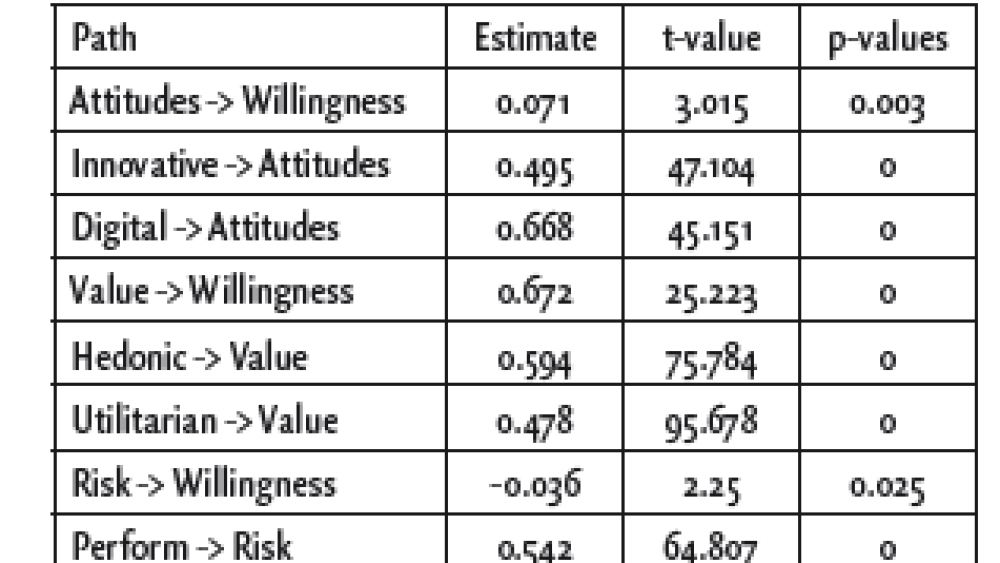
1. The model sees two major forces contraposing in their effect on the adoption of the solution: value and risk (see table 1). The first is built on the utility value, which identifies the monetary and functional benefits of the proposition, and on the emotional element which assess the enjoyment and pleasure provided by the solution. Risk is assessed in its two components of privacy, relative to the ethical sphere of acceptance of the data sharing and processing, and performance, focusing on the satisfaction of the expectations and on IT infrastructural reliability issues.
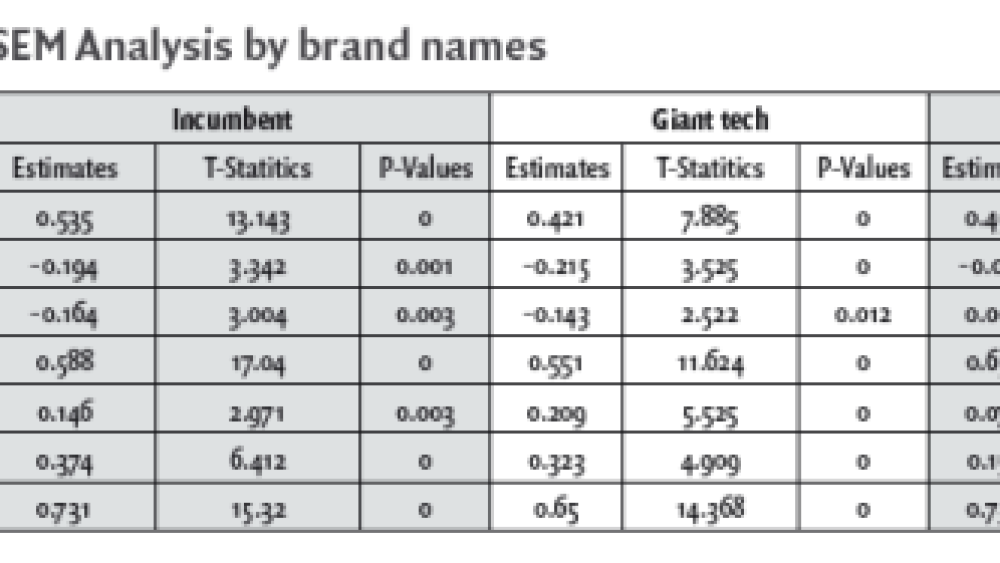
2. The results showed that the solutions coming from the incumbent player suffer of a small level of disadvantage in the adoption desire generated to consumers triggering an overall lower emotional attachment toward them (see table 2). Tech players are found to be the most favorable emotion generator of the three player categories and, since the model demonstrated that users are giving a greater importance to the emotional value than to the utility factor generated by the solution, set up an advantage in terms of expected adoption rate. Fintech players on the other hand are attributed more value from the utility generated by their solutions over the emotional trigger. They rely on a slightly greater emotional value from respondents from larger urban clusters, covering higher level job positions.
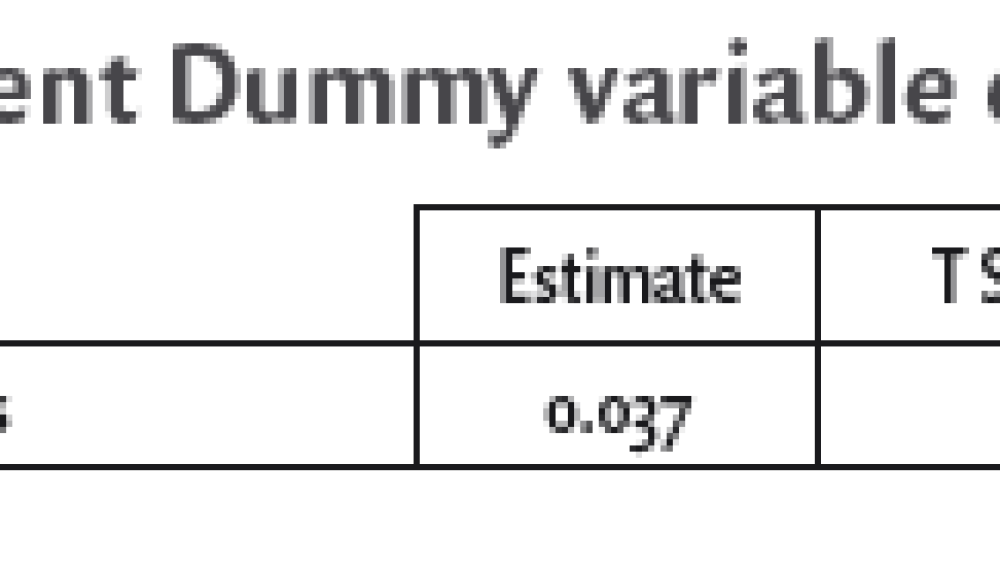
3. Incumbents were found to derive a stronger emotional value when their brand fit is high and therefore need to carefully evaluate the extents to which define the borders of their business (see table 3). On the other hand, since distancing from the core overall generates a greater emotional value, incumbents are required to exercise an expansion in their scope. This requires a great brand legitimacy and fit which forces incumbents to find a trade-off among stretch the brand and fall within a legitimate scope of action without creating ruptures in the expectations of consumers. Sample specificities strongly impact the perception of distance from the core and therefore determines the perceived extension expectations of a brand creating a strong need for personalized and modular features which can adapt to the user’s different needs and requirements.
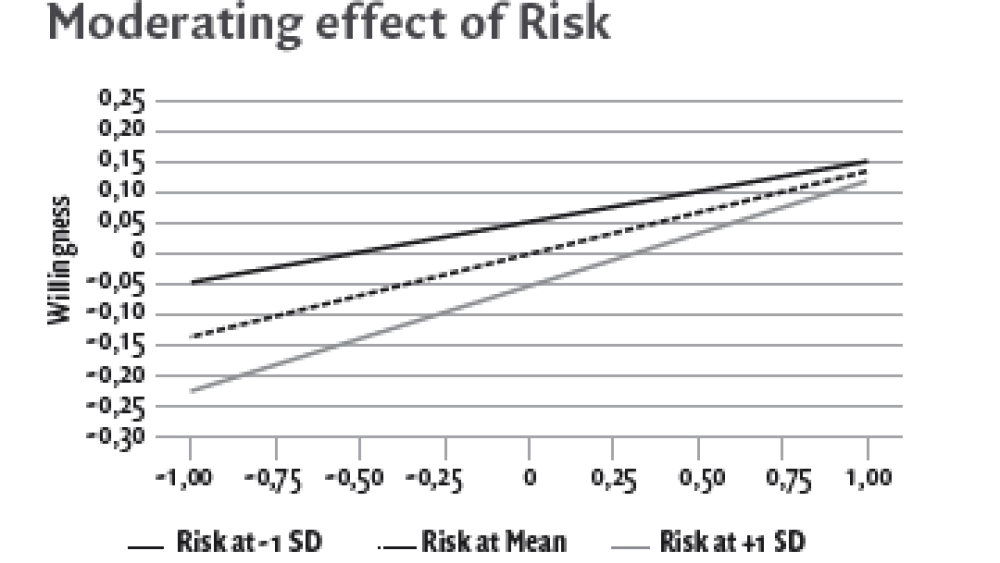
4. Brand extension plays also an important role in mitigating the risks perceived by users (see figure). A good brand-solution fit moderates the negative effects on acceptance given by the perceived risk. These impact the willingness to use more significantly in the case of performance than for privacy risk. This is motivated by the fact that privacy risk has a cross-firm and cross-industry strong endogenous element (e.g. cyber-attacks and data breaches) which could potentially affect any firm category from the external, while performance is much more relying on internal business design and professional working habits which are intrinsic in the modus operandi of a firm and communicate value more directly to users. Since open banking creates a greater data circulation, it is important that all players convert to seamless IT infrastructures in order to cope with both the risk issues at the same time.
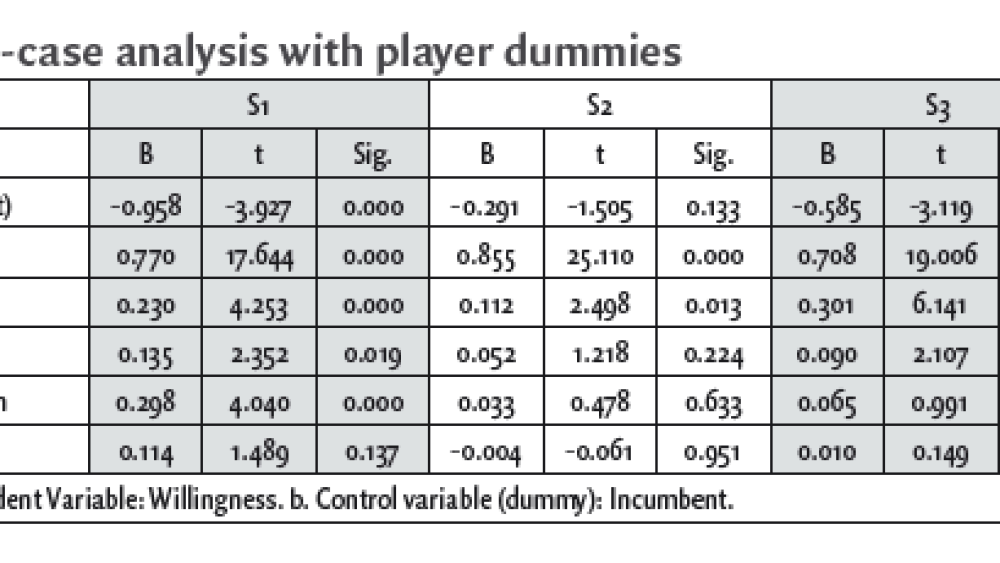
5. Distance from the core also determines reinforcement and amplification of the emotional value as the level of digitalization of the consumer increases (see table 4).Further statistical exploration shows that this characteristic is recognized in younger respondents who are the most pleased ones in experiencing social interactions or holistic features in the solution, satisfying their innovation appetite. This is evident in solutions coming from tech and fintech players, which see easier appeal in young generation adopters. On the other hand, incumbent players are found not to have any generational bias. This enable them to diffuse a cross-age innovation message with lower generational friction elements than other players also strong of the strong and hard to reach institutional legitimacy this player was able to develop in centuries.
Key managerial implications
The interpretations of this study indicate that legitimacy in innovation is more fluid and quicker to build than in other historical ages. Curiosity and digital attitudes allow customers to be more receptive. But this is happening by determinants based on specific cultural, demographic and professional context experienced by the costumer. The institutional innovation researched by Glynn and Abzug (2002) is strongly defined by the ground up and only require a small degree of institutional legitimation for its acceptance general audience. Always under demographic boundaries, relatively unknown players are perceived with lower risk than other more institutionalized players, profiting from the ground-up legitimation.
AAs people got back the ownership rights on personal financial data with PSD2 and GDPR, it is of great importance to give them the right of choosing solutions. Personalization level and feature design are essential to target specific group of users with the right degree of innovativeness, and, even if the digitalization level is rising pushing toward an all rounded solution similar to the all-features-included “Super App” concept, incumbent players cannot focus on a single proposition in order to retain the interest of each age and category group. The paramount capability to develop therefore is a deep understanding of user behavior. This has been proven by the wide degree of specificity of the answers obtained in the sample. The request from consumer is therefore to be the center of the product developed, and to address personalization on an individual level, keeping the overall concept of single app control system.
Legitimacy within a brand-new sector, though, is found to be related to the capabilities toward the sectors on which the actor owns its leading competences changing the risk perception toward different players proposing the solution. This approach does not guarantee the success in the new sector unless the capabilities required by the new adjacency are strongly identified as proxime to the core business ones. Since the evidence is also related to the credibility of the new entrant and in the resources deployed toward it as, players with greater cash resources like giant techs are seen more credible in the threat as they can afford to risk more as their business model relies on stable cash flows of a monopoly positioning.
Conclusion
It is important to highlight how the whole added value concept has a multidimensional utility both practical and emotional terms for consumers. Our research found out that utility and hedonic values are not only determinant for adoption but are also intensely relying on the maximum extension capacity of the brand in a disruptive context. The influence of brand strongly contributes in the perceived utility but also in regards of emotional value, but while emotional value has major impacts toward the adoption will of the solution, utility does not act significantly as a trigger for adoption.