Leveraged loans are issued by corporations considered as speculative. They typically pay Libor +220 basis points or more.
Leveraged loans have unique features
Leveraged loans are commonly used for 3 reasons. First, M&A and LBO activity. Financial sponsors typically use them to provide flexible medium-term finance to fund acquisitions rapidly. The loan syndication process can be time-consuming and uncertain, but banks have developed an expertise in
it
[1]
. These loans may then be subsequently refinanced in the High Yield bond markets, although to a greater extent in the US than in the European market. In a US LBO, a typical loan has, on average, a size estimated at $613 million, a maturity of 6.2 years and a spread of 318 basis
points
[2]
. Second, general corporate purposes. Third, Refinancing. Leveraged loans are usually issued in two different tranches. The first type is Pro rata debt, which consists of the revolving credit and amortizing term loans (TLa). This type of debt is syndicated to banks when they act as investors. The second type is Institutional debt. It is addressed to institutional investors. This tranche includes first-lien TLb and TLc facilities, and second-lien loans, although TLc tranches have become rare since the 2007 credit crunch. Traditionally, institutional tranches were referred to as TLb because they were bullet payments and lined up behind TLa. Lenders expectations in the syndicated loan market are clearly different than the ones for non-syndicated loans, as explained by Elisabeth de
Fontenay
[3]
. First, leveraged loan buyers act as investors and not just as lenders. They seek investment opportunities as for other assets. Their expectations include their ability to trade the loan in a liquid market. Second, they may not have long standing relations with the borrowers. As syndicated loans are not treated as securities, they have fewer disclosure requirements than High Yield bond, an attractive feature of this market for issuers that can also be an advantage for investors if they have more expertise and resources than their peers to detect inefficiencies.
Leverage loan issuance level remains low in Europe
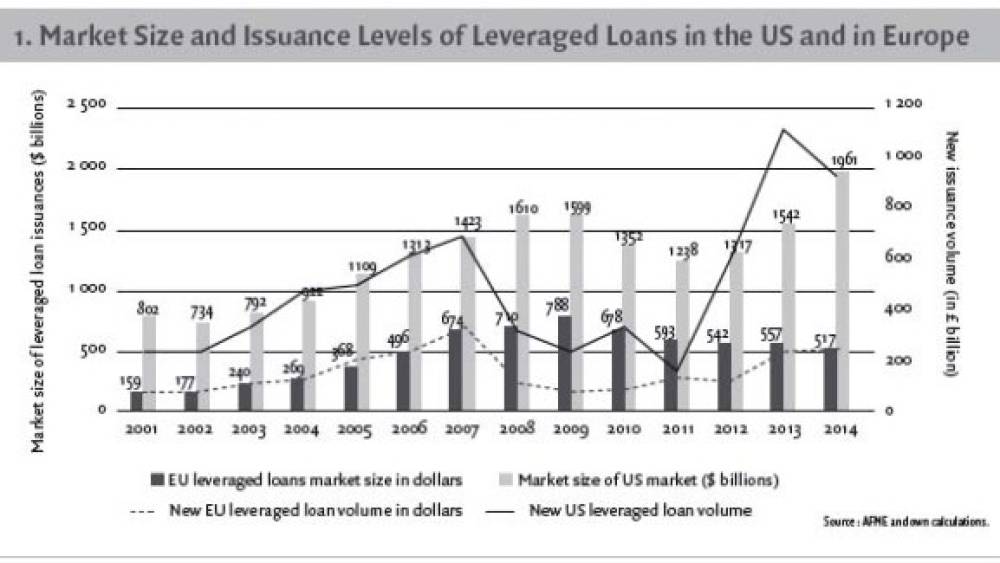
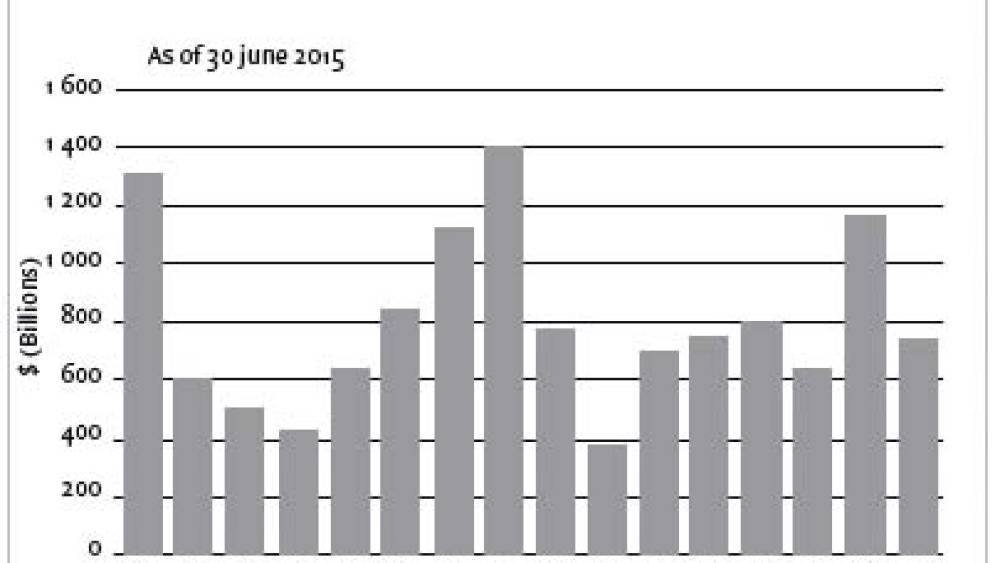
Leveraged loan volume has decreased in Europe according to the Association for Financial Markets in Europe (AFME). The level is still well below the 2007 one. In the US, the results are different, with a leveraged loan market size that has increased and exceeded its 2007 level (Figure 1). The US leveraged loan market represented $612 billion in 2012, compared to €150 billion in Europe at the same period. The low number of new issuances in Europe, coupled with the fact that the market is lower in terms of outstanding amount, is problematic. In fact, leveraged loan issuances drive Collateralized Loan Obligation (CLO)
issuances
[4]
. On the other side, leveraged borrowers need the liquidity brought by CLOs to issue new leveraged loans. This problem has been identified by John Hintze in March
2013
[5]
. He named it the “chicken-or-egg causality conundrum” dilemma. The share of CLO managers as primary investors is lower in Europe with 20% of market shares at the end of 2011 compared to the 50% market share that they occupied as primary investors in the US at the end of 2014. Therefore, CLOs do not capture all the market shares of the leveraged loans in Europe. This means that if they don’t invest in leveraged loans, it is because these assets do not match their expectations and requirements. When we look at the risk-return profiles of the leveraged loans in Europe compared to the one of the US, we do not find results suggesting that their performances are lower.
The European market is less diversified, less matured and liquid…
Low issuance level is the consequence of multiple factors. First, there is a lack of diversity in this market, as identified by Kitty Larsson in
2013
[6].
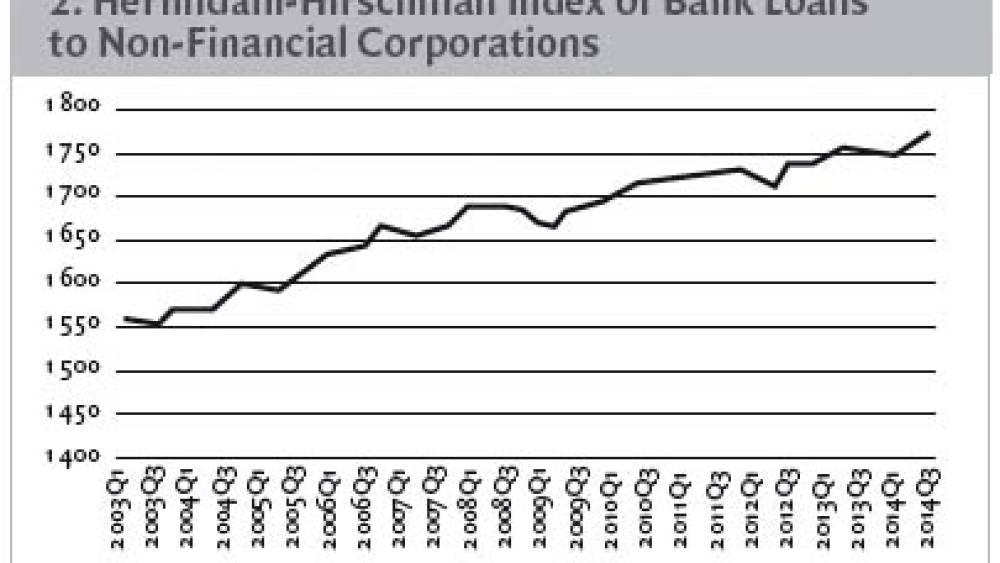
He determined that European CLOs needed between 60 to 80 loans to be considered as sufficiently diverse, and that CLO managers will continue to “scramble” for assets. Due to lack of data, it is impossible for us to have the evolution of the leveraged loan concentration index. However, when we compute the Herfindahl–Hirschman Index on loans accorded by banks to non-financial corporations in Europe, we can see that the index is increasing more and more, meaning an increased concentration in the sectors where loans are granted (Figure 2). This lack of diversity is often attributed to the Leveraged buyouts and Mergers and Acquisitions activity based in Europe in recent years. This activity has increased sharply between 2004 and 2007, leading to a growth in the syndicated loan market, but the trend stopped during the financial crisis. Second,the US dollar denominated institutional leveraged loan market is more mature, larger with more liquidity according to John Hintze. Elisabeth de Fontenay analysed the factors leading to a deeper loan market in the US in
2014
[7]
. She noticed that the US corporate bond market and the US leveraged loan markets are rapidly converging. While her article focus on the lax law standards, she identified several features that described the conversion of the traditional loan market to a market similar to bond securities :
The loan market has achieved comparable depth and liquidity to the bond market.
The offering size for leveraged loans has evolved. When historically the dominating model was “originate and hold”, a new standard named “originate and distribute” has emerged. Several factors led to this. First, there has been an erosion of the line between commercial lending and Investment banking activities. Second, the introduction of Basel 2 in 2004 incentivized banks to diversify their assets. Instead of keeping few loans of large amount, they had more incentive to invest in many loans but keep smaller amounts, which drove syndication activity. Third, the role of banks has changed. Historically, they had to fund, monitor and hold the loans while now they have to find new investors and administer the credit relationship. This has increased institutional investors’ appetite, such as CLOs.
The demand size of the leveraged loan market has also evolved. The rise of LBOs in the 1980s changed the role of loans that were historically reserved to blue-chips, low leveraged borrowers. In addition, loan mutual funds saw their size increased due to interest from retail investors and increased investor interest.
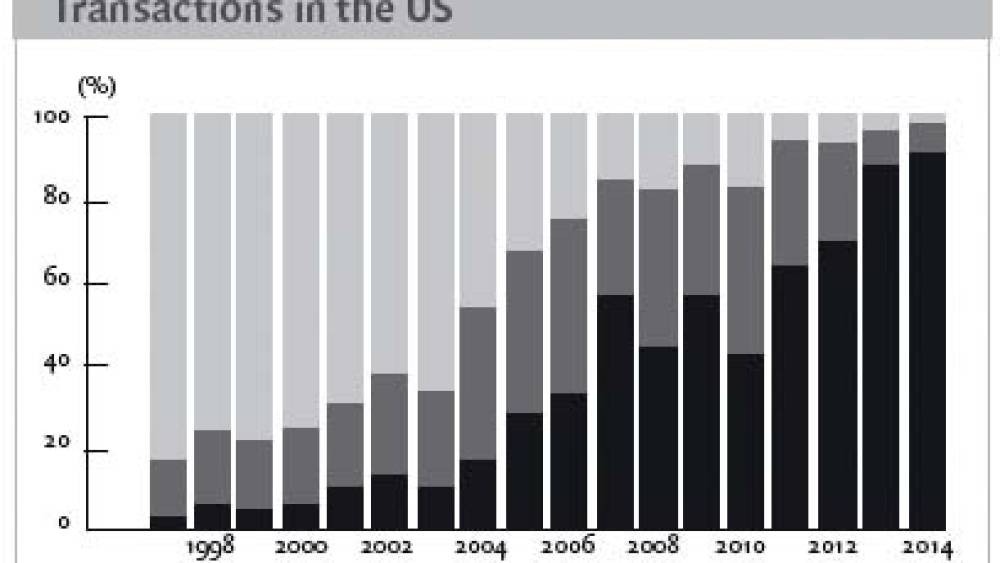
The rise of LBOs and needs to leveraged borrowers conducted to the weakening covenants. Cov-lite loans have emerged, representing 35% of all leveraged loans outstanding in 2013, leading to a leveraged loan market with “bond style”
covenants
[8]
. The number of covenants included in a leveraged loan transaction is
also decreasing
[9]
(Figure 3).
The development of loan associations, enhancing the visibility, visibility and transparency on the loan market, such as Loan Syndications and Trading Association (LSTA). Also, new documentation and features standards for syndicated loans have appeared and credit rating agencies have started the rating of leveraged loans.
The apparition of new databases regarding syndicated loans have emerged.
Differences of leveraged loans as a tool. In the US, leveraged loans are used as a corporate financing tool while in Europe, they typically support M&A, LBOs and similar one-off transactions. In the UK, less than 10% of the financing is provided through leveraged
lending
[10].
The European culture does not support capital investment as in the US.
All these consequences have resulted in a pricing of loans converging to the bond market in a very short period in the US, with an increased trading volume and liquidity. This change has not yet occurred in Europe. The less mature European market is also characterized by a stronger share of banks as investors in the primary market. Banks generally prefer to hold their impaired loans to maturity instead of selling them with a big haircut. This situation impacts negatively more the European market than in the US, reducing the liquidity level. This problem has been highlighted by the study performed by Oliver
Wyman
[11]
, in which half of the participants called for an expanded European Private Placement market, through possible pan-European and/or national regulation/directives. This would provide faster and more flexible access to non-bank investors.
…and the environment is very competitive
Second, low leveraged loans issuance levels can be attributed to the very competitive environment LBO sponsors are facing. As explained by Claire
Ruckin
[12]
, LBO sponsors use leveraged loans to acquire companies. However, there is a fierce competition due to the strong interest of corporate
buyers
[13]
. Although there is an increasing number of M&A deals, this competitive landscape may dry the issuances of leveraged loans if Private Equity firms do not win some deals. Among the most recent examples, we can cite Irish building supplies group CRH that agreed to buy assets of rivals Lafarge and Holcim for 6.5 billion euro. Blackstone, a Private Equity firm, was also among the potential acquirers, but didn’t win the acquisition. In addition, this increasing share of corporate buyers against Private Equity firms may impact negatively the leveraged loan market in a second, longer term, as Private Equity firms also use leveraged loans for recapitalization purposes. Consequently, borrowers are incentivized to turn toward the bond market. Finally, large takeovers, that require large leverage (with a multiple of debt to equity higher than 6) are relatively rare in
Europe
[14]
.
A third reason relates to the use of leverage loans. This type of financing tool competes with High Yield bonds, IPO and between issuance places. Loans and bonds do not have, traditionally, the same role and protection in the capital structure of
firms
[15]
[i]. The place of syndicated loans as a substitute of bonds or as a complementary tool is unclear. Allen and
Gale
[16]
as well as Boot and
Thakor
[17]
saw them as substitute while Song and
Thalor
[18]
concluded that they were complementary. The use of High Yield bonds is however becoming similar to leveraged loans, fostering competion. First, capital markets have become more accessible, especially for High Yield corporate borrowers, which have been most affected by constrained bank
lending
[19]
. This possibility of tapping the public debt markets for High Yield corporates has increased the interest of these borrowers. For instance, speculative issuers have issued more bonds than loans in
2015
[20]
. Second, companies seek to diversify their source of financing, and the High Yield bond market can allow that. High Yield bonds have, generally, a life comprised between 7 and 10 years when leveraged loans last between five and seven years. Therefore the maturity of the debt of the company can be extended. Third, regarding the interest cost for the borrower, leveraged loans and High Yield bond exhibit differences. At a bond issue, the borrower may engage to pay an interest rate that is fixed, determined by the coupon at issuance. For leveraged loans, the interest rate is resettled quarterly and quoted as a spread to a benchmark such as the Libor. Therefore, in an environment with low interest rates, issuers have more interest to issue bonds than leveraged loans. Consequently, 2013 has seen record levels of bond-for-loan takeouts and leveraged loan
refinancing
[21]
. This issue has been raised by Moody’s in its 2015 Outlook : refinancing activity will not likely boost volume the way it has done in the recent past because many European companies have already met much of their funding needs by refinancing loans with bond
issuance
[22]
. Fourth, bonds issuance have more flexible covenants and fewer constraints, and include a portability clause. Portability clause gives more flexibility to the actual owner of the firm. They can sell the business without being obliged to make a change of control
offer
[23]
. Since its introduction in 2010 on the European
market
[24]
, this feature has strongly encouraged sponsors to use High Yield bonds in their acquisition financing activity. For instance, at the end of June 2015, the European Private Equity Industry had raised euro 13.78 billion from the European bond market, and is expected to beat its 2013
record
[25]
. Investors preferences between the two type of assets are also determining, as they influence the demand size. High Yield bond prices vary negatively with Interest rates while for loans the price tends to be less affected by such variation. However, HY bonds have an advantage regarding leveraged loans because they are considered securities. Many investors, such as pension funds, mutual funds and insurance companies are required to hold all or a minimum portion of their assets in securities. This can be due to regulatory reasons or internal policies. Therefore, their ability to finance leveraged loans is limited as they are not considered securities. Second, there is also a competition between leveraged loans and IP Initial Public Offerings (IPOs). The takeover market is indirectly related to the leveraged loan market, as the acquirer may potentially issue a leveraged loan why it is not the case for IPOs. James C.
Brau
[26]
identified several factors that incite firms to opt for IPO relative to being subject to a takeover : Concentration of the industry, High-tech status of the firms subject to a takeover, current cost of debt, hotness of the IPO market relative to the takeover market, percentage of the insider ownership, size of the firm. In Europe, the IPOs market also showed signs of recovery, with a record of issuances since
2008
[27]
. However, the instability regarding China and the large variations of the euro currency led to an increase in
volatility
[28]
that is correlated negatively to this market. When the economy will be more stable, the IPO market will expectedly come to compete with the takeover market. Finally, there is also a competition across regions. Borrowing companies and investors can now, thanks to a well-integrated market, borrow or lend on different markets. Therefore, the European and US leveraged loans markets can also compete between themselves. The case of H.J Heinz Co is interesting regarding that matter. The $28 billion buyout by Berkshire Hathaway and 3G Capital included $12 billion in monthly debt term. Among that amount, $1.4 billion was supposed to be denominated in euro and $600 in sterling. Those, these tranches would have been listed on the European market. Many European CLO managers were interested. However, greater demand from the other side of the Atlantic incentivized banks to cancel their European portion and issue all the loans in
dollars
[29]
.
Loan market development should boost issuances
However, leveraged loans have interesting opportunities in Europe. First, the European market is becoming more and more similar to the US market. It is characterised by a reduced role of banks as investors, an increasing appetite from investors and more Covenant-lite loans. Banks in Europe have historically played a significant role in the European Economy. It has allowed foreign banks to compete between national banks, changing the competition landscape. It has, indeed, created a large integrated market useful for the financing of large
corporations
[30]
. Since the financial crisis, the European authorities have engaged toward a disintermediation phase that capitalize on the redistribution of risks toward financial markets. This aims to increase the role of institutional investors and reduce the one of banks as lenders. Global regulations have increased the cost of capital of banks for their bilateral lending activities and pushed corporates to finance directly toward the financial markets. This trend should lead the European system more closely toward the US system. Therefore, the syndicated loan market is expected to develop more in the Euro Area, increasing the role of institutional investors and their shares in the syndicated loans, and consequently in leveraged
loans
[31]
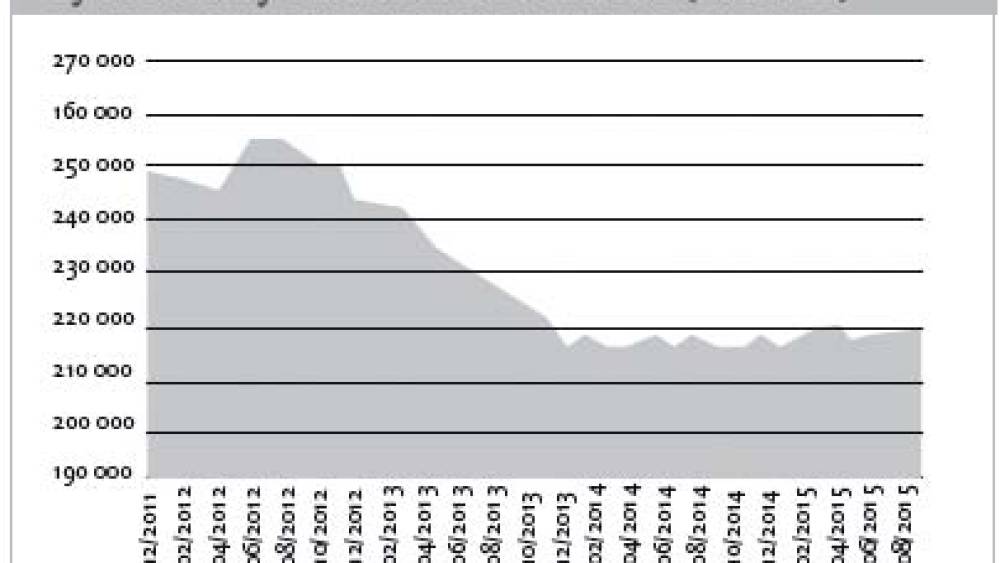
. When we look at the amount of syndicated kept by Monetary Financial institutions in Europe, we can see that since 2012, they have decreased the amounts that they hold in their balance sheet (Figure 4). This can be explained by the deleveraging trend that appeared in the Euro area for banks to meet Basel 3 requirements. This result in a decreasing share of syndicated loans held by banks to the profit of institutional investors that showed a pick-up in 2013 according to Oliver Wyman, although the share of banks is still larger than the one in the US. This should drive liquidity in the leveraged loan market.
The second development opportunity for the leveraged loan market relates to the demand size. Institutional investors can now access markets more easily due to the single currency, the development of International Financial Reporting Standards (IFRS) and NTIC. Investors are more and more interested in leveraged loans for three features. First, investors are increasingly interested to gain exposure in the secure part of a company’s capital structure. The development of the leveraged loan market in Europe has attracted a large number of investors that have developed internal credit rating and assessments regarding the potential companies. A real “credit culture” is developing in Europe. Second, European leveraged loans have outperformed the US High Yield market and US leveraged loan market in
2013
[32]
. Third, there is an increasing standardization of loan documentation. Fourth, investors are more confident to invest in loans backing LBO transactions due to an increase of the equity to debt ratio, protecting more the loan
holders
[33]
. The development of the market is also characterized by the increasing share of cov-lite loans. The percentage of cov-lite loans has increased from around 2% to 8% between 2009 and 2014 in Europe, versus an increase from 18% to 50% in the
US
[34]
This form of loan involves less requirements regarding the pledge collateral payment terms and income disclosure. Therefore, it gives more flexibility to the issuer and incite them to borrow through the leveraged loan market. Cov-lite loans are mainly used for leveraged buyouts. The first European “pure covenant-lite” was issued in 2014 with the buyout of Ceva Sante Animale for euro 818
million
[35]
. It should also interest investors that had to tap the American market before to access this type of leveraged loans. In addition, cov-lite loans exhibit a higher interest paid to the lender, as they are riskier. Overall, the credit standards for leveraged loan issuances are weakening in Europe, following the same trend than in the US. This increase of interest by investors results in an increased liquidity and depth of the market and actually boost borrowers to issue new leveraged loans.
Macroeconomics conditions are also positive for the market
The old continent is engaged in a recovery step since the 2007-2009 financial crisis, with a stronger banking system and increasing LBO and M&A activity. Since the financial crisis, the Europe was in a period of poor macroeconomic conditions. However, the economy is showing sign of recoveries. This should dampen enterprise prospects, as well as investor confidence. The economic cycle of an economy is very important for loan products. When an economy recovers, defaulted issuers have more ability to restructure their debt and exit bankruptcy, reducing the number of impaired loans and improving, therefore, loan
performances
[36]
. Leveraged loan performances are strongly correlated to the overall economic activity of their region. When we compute the correlation between the MSCI Europe and the European Leveraged loan index, we find a correlation of 0.574. Furthermore, the lag time between the European recovery and the US one (the US economy is recovering faster than in Europe) may be an advantage and a source of development of the leveraged loan market as interests should, expectedly, rise first in the US. As it will cost more to issuers to issue debt in the US, investors may prefer the European market place, increasing the leveraged loan offer. Also, the American currency is expected to rise against the Euro. Those, European lenders may have more costs to invest in the American and may favour the European market, increasing the supply side. Finally, interest rates are expected to increase in Europe, although less rapidly than in the US, favouring leveraged loans compared to High Yield bonds. In Europe, the High-Yield bond market volatility is expecting to decrease, enhancing the ability of CLOs to issue tranches at a lower
cost
[37]
The European banking system is also becoming stronger. Kaya and
Meyer
[38]
Finally, Leveraged loans issuances should be driven by LBO and M&A activity. Unrated LBO issues represent more than 28% of European CLO collateral, and most of them face the bulk of refinancing needs in the near term. This may increase the diversity of the European leveraged loan market. Also, increased leveraged buyout activity in Europe should increase the amount of leveraged loan issuances and in the same time providing the diversity needed by CLO managers. M&A activity is on the rise in Europe (Figure 5), with a record of activity since
2008
[39]
. Among the High Yield New issue, the increased share of dividend recapitalization and M&A activity may also impacts positively the diversity needed for a revival of the European leveraged loan market.
1
Andrei Shleifer and Robert W. Vishny (May 2009), “Unstable Banking”, National Bureau of Economic Research, NBER Working Paper Series No 14943.
2
Lily Fang and Victoria Ivashina (April 2013), “Combining Banking with Private Equity Investing”, Harvard Business School, Working Paper No 10-106.
3
Elisabeth de Fontenay (March 2014), “Do the Securities Laws Matter? The Rise of the Leveraged Loan Market”, Duke University School of Law, Journal of Corporation Law (2014, Forthcoming).
4
Conor O’Toole and Ganesh Rajendra (2008), “Profiling European leveraged loan CLO Managers”, Global Securitisation and Structured Finance 2008, Deutsche Bank.
6
Kitty Larsson (2013), “The Rebirth of the Collateralized Loan Obligations – A Case Study of the Dynamics in the European Collateralized Loan Obligation market”, University of Gothemburg.
7
Elisabeth de Fontenay (March 2014), “Do the Securities Laws Matter? The Rise of the Leveraged Loan Market”, Duke University School of Law, Journal of Corporation Law (2014, Forthcoming).
8
www.leveragedloans.com.
9
Jerome H.Powell (Feb 2015), “Financial Institutions, Financial Markets, and Financial Stability”, NYSU, page 19.
10
Joseph Cotterill (March 2015), “Euro Leveraged Loans Take on American Flavour”,The Financial Times.
11
Oliver Wyman (June 2013), “Unlocking Funding for European Investment and Growth”, AFME.
12
Claire Ruckin (September 2015), “LPC-European LBO Activity Stays Strong”, Reuters.
13
Claire Ruckin (Fevruary 2015), “European Leveraged Loans Face Dry Spell as LBO Pipeline Shrinks”, Reuters.
14
Joseph Cotterill (March 2015), “Euro Leveraged Loans Take on American Flavour”, The Financial Times, Capital Markets.
15
Yener Altunbas et al. (March 2009), “Large Debt Financing, Syndicated Loans versus Corporate Bonds “, ECB, working paper series No 1028.
16
Allen, F., and D. Gale (1997), “Financial Markets, Intermediaries, and Intertemporal Smoothing”, Journal of Political Economy, 105 (3), pp. 523-46.
17
Boot, A.W. and A. V. Thakor (2000), “Can Relationship Banking Survive Competition?”, Journal of Finance, 55 (2), pp. 679-13.
18
Song, F., and A.V. Thakor (2008), “Financial System Architecture and the Co-evolution of Banks and Capital Markets”, Working paper, Pennsylvania State University.
19
Moody’s Investors Service (December 2014), “Disintermediation in Europe Continues Even as Banks Achieve More Stable Financial Footing”, www.moodys.com.
20
Moody’s Investors Service. (July 2015), “High Yield Interest”, European Edition, page 2, www.moodys.com.
21
Moody’s Investors Service (March 2014), “European CLO Market Comes Back to Life”, www.moodys.com.
22
Moody’s Investors Service (2015), “Outlook Global CLOs”, www.moodys.com.
23
James Mc Donald et al. (2012), “Bridging the Gap: High Yield Bonds in Acquisition Finance”,
Privatedebtinvestors.com.
24
Clifford Chance (May 2013),“the Rise of Portability in European High Yield Bonds: Have Bond, Will Travel“.
25
Silvina Aldeco-Martinez et al. (June 2015), “EMEA PRIVATE EQUITY – Market Snapshot“, S&P Capital IQ.
26
James C. Brau et al. (June 2001), “The Choice of IPO Versus Takeover: Empirical Evidence”, Brigham Young University.
27
Pwc (October 2015), “IPO Watch Europe Q3 2015”,
www.pwc.co.uk.
28
Freya Berry (August 2015), “As China Sneezes, Bankers Hope European Ipo Market won't Catch Cold”,
http://uk.reuters.com.
30
Yener Altunbas et al. (March 2009), “Large Debt Financing, Syndicated Loans Versus Corporate Bonds “, ECB, working paper series No 1028.
31
Bloomberg. (March 2014), “The Rise of the Leveraged Loan”, Leveraged Finance’s structural change, www.bloomberg.com.
32
Ibid.
33
Thierry De Vergnes (September 2013), “European Leveraged Loans Are Ripe for the Picking Again”, Expert Opinion, Investment Insights from Lyxor Asset Management
35
Claire Ruckin (September 2015), ”LPC-Covenants Fall Away on European Leveraged Loans”, Reuters
36
Michael Cerminaro, Mark Liscio and Steven Miller (2010), “Lessons from the Great Credit Crisis”, The Definitive Guide to Distressed Debt and Turnaround Investing (2 Edition), PEI Media.
37
Gavin Jackson (October 2015), “European CLO Reboot Still Has Bugs to Erase”, The Financial Times.
38
Orçun Kaya et al. (April 2014), “Tight Bank Lending, Lush Bond Market – New Trends in European Corporate bond issuance”, Deutsche Bank research, Current issues, Global financial markets.
39
Mike Della Vedova (September 2015), “The Rise of M&A Activity in Europe: Implications for High Yield Investors”.